Contact Form
Search




Short answer first: in most real-world jobs, dump truck and tipper truck refer to the same function, but they are not always the same vehicle. The difference is not about dumping, it is about where you are, how the truck is built, and what job you expect it to survive.
If you have ever felt confused because two suppliers used different names for what looked like the same truck, you are not alone. You are asking the right question.
This guide is written to help you stop guessing and start choosing the right truck with confidence.
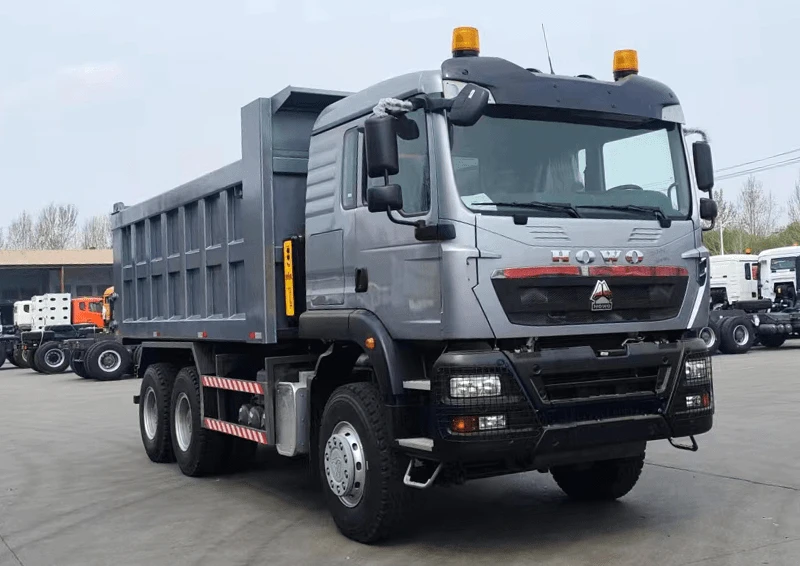
Think of it like this:
Pickup and ute describe a similar idea, but one word fits North America, the other fits Australia.
Soccer and football point to the same game, but language and culture change the name.
Dump truck vs tipper truck works the same way.
Both trucks are designed to carry loose material and unload it by tilting the body, but the name you hear depends heavily on region, industry habits, and vehicle size.
When people say dump truck, they usually mean:
A heavier-duty vehicle
Designed for construction, mining, quarry, and infrastructure work
Often built on rigid or reinforced chassis
Expected to operate in harsh conditions: uneven ground, heavy payloads, long working hours
In many markets, a dump truck implies:
Larger payload capacity
Stronger hydraulic systems
Higher axle loads
If your job site is rough, time-sensitive, and unforgiving, people tend to say “dump truck.”
When people say tipper truck, they usually mean:
A lighter or medium-duty vehicle
Used for municipal work, landscaping, farming, small construction, or short-haul transport
Often based on standard road truck platforms
Designed to operate mainly on paved or semi-paved roads
In many regions, especially outside North America, tipper truck is simply the everyday term for any truck with a tipping body.
If your work is frequent but not extreme, people often say “tipper.”
Most articles tell you:
dump = big
tipper = small
That explanation is incomplete.
The real difference is not size. It is duty expectation.
Ask yourself one question:
Do you expect the truck to survive abuse, or simply do a job efficiently?
Dump trucks are built to endure punishment
Tipper trucks are built to optimize cost and flexibility
This difference affects everything: frame thickness, suspension choice, axle rating, hydraulic reliability, and long-term maintenance cost.
Your location strongly influences which word is used.
North America: Dump truck dominates
UK, Australia, Southeast Asia, Africa: Tipper truck is more common
Middle East: Both terms are used, often interchangeably
Important point: the same physical truck may be sold under different names, depending on the market.
This is why relying only on the name can lead to wrong purchasing decisions.
| Aspect | Dump Truck | Tipper Truck |
|---|---|---|
| Typical duty | Heavy, continuous | Light to medium |
| Work environment | Construction sites, mines | Roads, farms, cities |
| Chassis strength | Reinforced | Standard or semi-reinforced |
| Payload expectation | Very high | Moderate |
| Cost | Higher upfront | Lower upfront |
| Operating style | Harsh, repetitive | Frequent but gentler |
This table shows trends, not rules. The same truck model can fall into either category depending on configuration.
This sounds counterintuitive, but bigger is not always better.
A dump truck may be the wrong choice if:
Your payload is light but frequent
You operate mainly on city roads
Fuel cost matters more than extreme durability
Your drivers are not trained for heavy off-road operation
In these cases, a tipper truck often delivers better total cost of ownership.
On the other hand, a tipper truck may disappoint if:
You overload it regularly
You work on uneven or soft ground
You dump on slopes or unstable surfaces
Downtime is extremely costly
In these situations, calling it a “tipper” does not protect it from physics.
Forget the name.
Choose based on:
Payload weight (real, not optimistic)
Road vs off-road ratio
Dumping frequency per day
Ground condition
Long-term maintenance tolerance
If you choose correctly, the label becomes irrelevant.
Are dump trucks and tipper trucks the same?
Functionally, yes. Structurally and commercially, not always.
Is a tipper truck smaller than a dump truck?
Often, but not by definition. Duty level matters more than size.
Which term should I use when buying?
Use specifications, not names. Sellers understand both.
Can a tipper truck do heavy construction work?
Only if it is engineered for it. Many are not.
If you remember one thing, remember this:
A dump truck and a tipper truck are separated more by expectation than by mechanism.
Once you understand that, choosing the right truck becomes much easier—and far less expensive in the long run.
© 2025 SINOTRUK. Privacy Policy | Warranty Policy
Address: No. 777 Huaao Road, Innovation Zone, Jinan, Shandong Province, China






 English
  French
  Spanish
  Portuguese
  Arabic