Contact Form
Search




What really matters is whether the trailer fits your cargo, your roads, and your permits. If you start from the numbers alone, you will often choose the wrong trailer. When you start from your real job, dimensions suddenly become easy to understand.
You search online and see many different numbers:
48 ft… 50 ft… 53 ft… legal width… loadable width…
Some articles list tables.
Some focus only on the U.S.
Some mix legal limits and practical loading limits.
But when you operate trucks, you don’t think like a textbook.
You think like this:
“Can this trailer move my cargo safely, without problems on the way?”
That is exactly how we will explain dimensions here.
Before talking about models and variations, remember these three key dimensions.
This is the physical length of the trailer itself.
Most common:
48 ft flatbed
53 ft flatbed
Shorter trailers are easier in cities.
Longer trailers help when your load is long but not heavy.
In most markets, legal width is usually:
2.44 m (8 ft) or
2.6 m (8 ft 6 in)
Some cargo may extend over the sides, but you may need permits.
Flatbed deck height is normally around:
1.4–1.6 m (48–60 in)
Lower decks help with tall cargo, especially if you want to avoid oversize permits.
Think of the deck like your dining table.
Same table, but different dishes require different plates.
Instead of giving one “answer,” here is the real picture:
| Type | Length | Width | Deck Height | Max Legal Load (varies by market) |
|---|---|---|---|---|
| Standard Flatbed | 48–53 ft | 8–8.5 ft | 48–60 in | 20–30+ tons |
| Short Flatbed | 20–40 ft | 8–8.5 ft | 48–60 in | Lighter, more flexible |
| Extendable Flatbed | 48 ft → 70+ ft | 8–8.5 ft | 48–60 in | Long cargo |
| Heavy-duty Flatbed | 40–50 ft | 8–8.5 ft | Often lower | Built for weight |
These are “operational” ranges. Local rules and road limits always apply.
Many guides skip this part — but this is where mistakes happen.
Steel decks are strong but heavier.
Aluminum decks are lighter but cost more.
Heavier trailer = less cargo weight allowed.
More axles mean more load distribution.
But more axles may increase cost, turning radius, and road restrictions.
Side loading, crane loading, forklift loading — each needs different clearances.
This is why you cannot just copy someone else’s “perfect flatbed.”
People often think:
“If the cargo fits the trailer, it is fine.”
Not always.
You also need to think about:
bridge height
city access rules
turning radius in narrow industrial areas
police inspection checkpoints
A good flatbed trailer is not only about the deck size.
It is about how smoothly you can deliver without interruptions.
Flatbed trailers are great when your cargo is not very tall.
But if your cargo is high, you may quickly hit legal height limits.
In those cases, operators often move to:
Step deck (drop deck) – slightly lower, avoids some permits
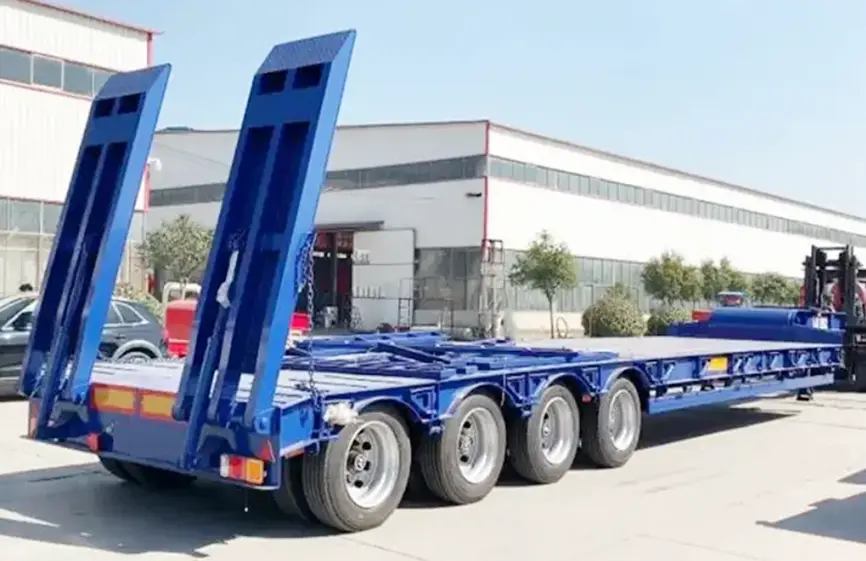
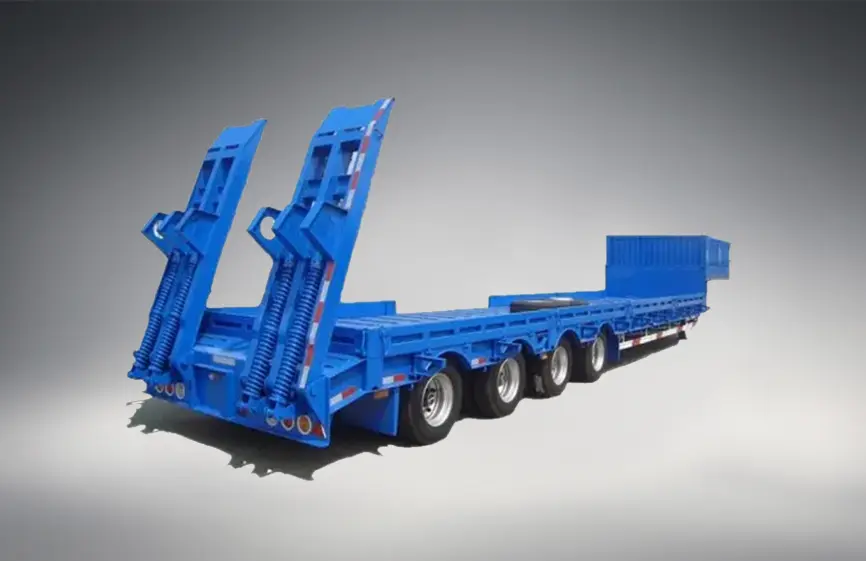
Lowboy / low-bed – designed for very tall or heavy equipment
So the question is not only:
“How long is the trailer?”
It is really:
“Can this combination keep you legal, safe, and efficient?”
Ask yourself three questions:
What do you carry most of the time?
Machinery, building material, pipes, containers, steel?
Where do you drive?
Highway only, or city + rural roads?
Do you want flexibility or maximum capacity?
Sometimes smaller, more flexible trailers earn more money.
When customers talk with us at Sinotruk Overseas, we do not start from the product.
We start from your routes and your cargo.
The trailer follows the job — not the other way around.
“53 ft is always better than 48 ft.”
Not true. 53 ft can be harder in cities and tight yards.
“Legal width means load width.”
Not always. Some cargo can overhang but may need permits.
“All flatbeds are basically the same.”
Structure, axles, materials, and deck height change everything.
What is the standard flatbed trailer size?
Most common sizes are 48 ft and 53 ft, but “standard” depends on your market and your cargo.
How wide is a flatbed trailer?
Usually 8–8.5 ft. Wider loads may require permits.
Can cargo extend beyond a flatbed?
Yes, in many places — but regulations apply, especially for safety flags and lighting.
Is a longer flatbed always more efficient?
No. Long trailers can limit access and turning, especially in urban areas.
© 2025 SINOTRUK. Privacy Policy | Warranty Policy
Address: No. 777 Huaao Road, Innovation Zone, Jinan, Shandong Province, China







 English
  French
  Spanish
  Portuguese
  Arabic