Contact Form
Search




When you compare a flatbed trailer and a lowbed trailer, the real decision is simple: choose the trailer that gives your cargo the safest height clearance. If you pick based only on weight or cost, you may face delays, route problems, or safety risks. Height is the factor that truly decides your transport success.
This guide shows you how to choose based on one clear rule:
If your cargo is tall, choose lowbed. For everything else, flatbed is usually enough.
Many articles compare structure, weight, or applications. Those are useful, but they often make the choice feel more complicated than it really is. In real transport work, you just need to protect your cargo from hitting bridges and keep your route open. Height decides that.
Let’s walk through it in a simple, practical way.
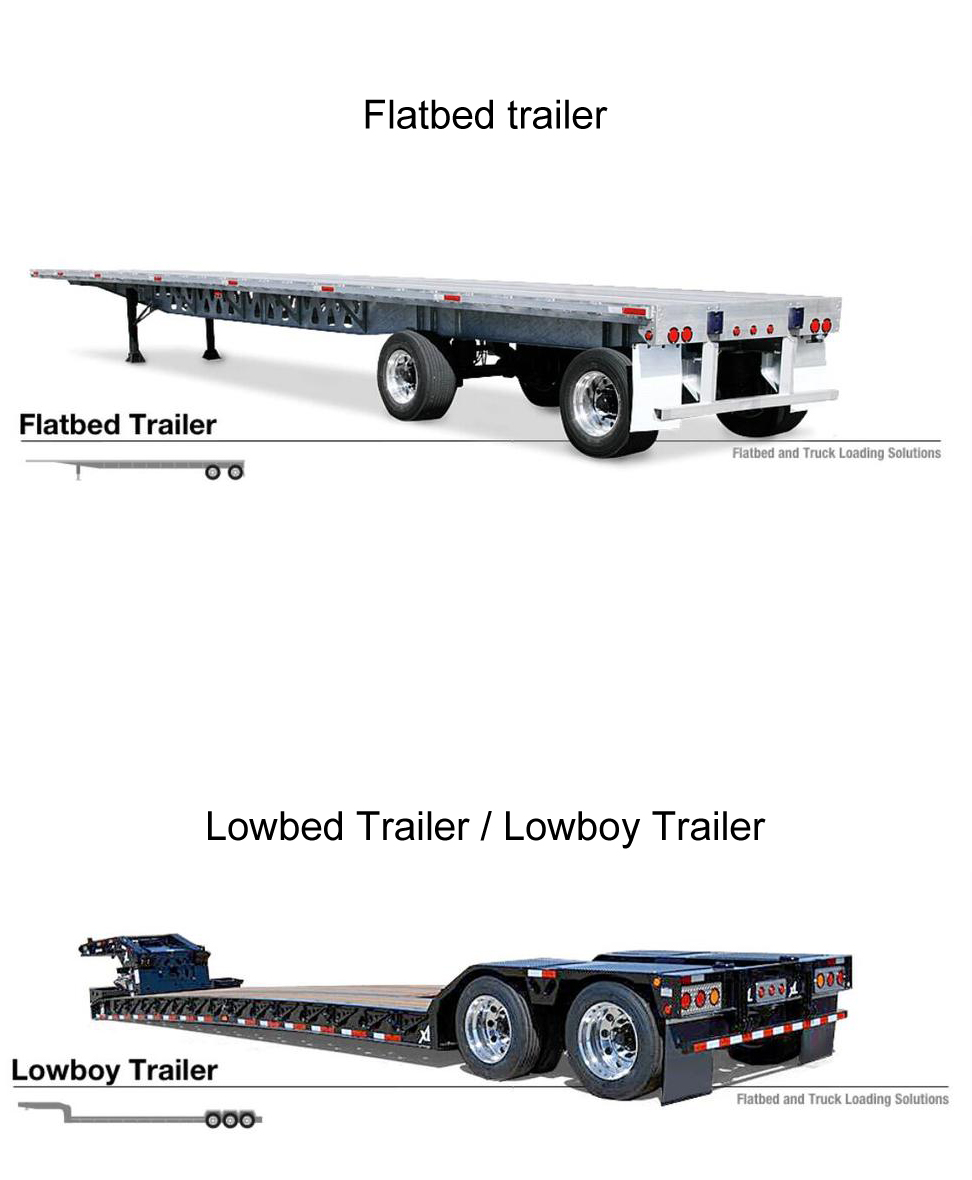
A flatbed trailer is like an open platform. You can load cargo from the top, side, or rear. For you, this means faster loading and more flexibility.
You usually use it for:
Containers
Building materials
Steel coils
Palletized goods
If your cargo does not exceed legal height limits after loading, a flatbed is often the most efficient and cost-friendly choice.
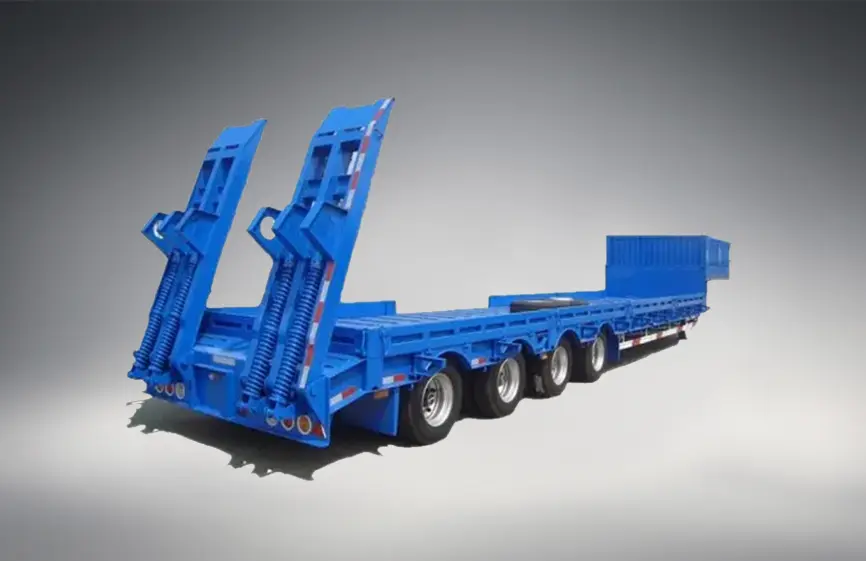
A lowbed trailer has a deck positioned much closer to the ground. Think of it as a flatbed that has “sunk down” in the middle to create extra height space.
This lower deck gives you two major advantages:
More room for tall cargo
A lower center of gravity for better stability
You normally use it for:
Excavators
Bulldozers
Industrial machines
Oversized equipment
If your cargo looks tall even before loading, a lowbed is usually the right match.
Most comparison articles talk about weight, axles, ramps, cost, etc.
These things matter, but they are not what forces you to change trailers.
What really pushes you to choose a lowbed is bridge height, road regulations, and your cargo’s natural height.
A simple example:
If your machine is already 3 meters tall, putting it on a flatbed may immediately exceed height limits. But placing the same machine on a lowbed may keep you fully compliant.
The height difference between a typical flatbed and lowbed (often 30–50 cm) may look small on paper, but that little difference is usually what decides:
whether you need special permits
whether your route is long or short
whether you can move today or you must wait
That is why height matters more than anything else.
Think of a flatbed as a dining table.
Think of a lowbed as a sunken living-room floor.
Both can hold things, but the low floor gives you more headroom.
If your “object” is tall, the low floor solves the problem immediately.
Use this cheat sheet based on your cargo height:
Cargo below height limits:
Choose flatbed. It is cheaper, easier to load, and widely available.
Cargo near height limits:
Choose lowbed to give yourself a margin of safety.
Cargo clearly oversized:
Lowbed is the only realistic option.
If you follow this rule, you avoid 90% of route problems that many transporters face.
Lower price
Faster loading
Fewer permits needed
Best for general cargo
Higher cost
Slower loading because of ramps
Often needs escort or permits
Best for heavy machinery and tall equipment
These differences exist, but none matter as much as protecting your load height.
Some people choose a flatbed simply because their cargo is not extremely heavy.
But weight is not the main risk.
Even a light cargo can be too tall for a flatbed.
Others think a lowbed is only for extremely heavy machines.
Not true.
You choose it for height, not weight.
Your decision should always start from:
What is my loaded height after securing the cargo?
If your cargo is tall or close to the legal limit, choose a lowbed.
If your cargo is normal size and does not raise height issues, choose a flatbed.
This approach gives you:
less route planning stress
fewer surprise permits
safer cargo movement
faster decision-making
When you use height as your starting point, you will rarely make the wrong choice.
Yes, as long as the loaded height stays within legal limits.
Usually yes, because it requires more structure, more axles, and often more permits.
Because many machines are tall even before loading. A flatbed would exceed height limits.
Yes, because you often need ramps and alignment, especially for tracked machines.
Yes, but most of the time it is not cost-effective.
© 2025 SINOTRUK. Privacy Policy | Warranty Policy
Address: No. 777 Huaao Road, Innovation Zone, Jinan, Shandong Province, China






 English
  French
  Spanish
  Portuguese
  Arabic