Contact Form
Search




Conclusion first: fuel tank truck capacity is not a fixed number.
What really matters is how capacity connects to tanker dimensions, regulations, and how you actually operate the truck. Once you understand this relationship, the numbers finally make sense—and you won’t need to keep searching.
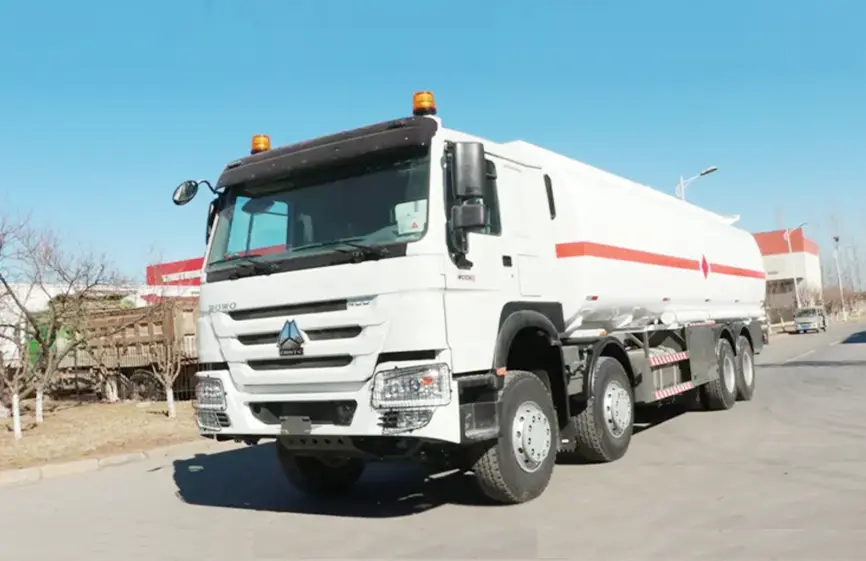
When you search for fuel tank truck capacity, you’re usually trying to answer one practical question:
“How much fuel can I move safely and legally in one trip?”
In reality, capacity has three layers:
The theoretical tank volume
The legal and operational load
The usable fuel in daily operation
A fuel tanker is like a suitcase.
Two suitcases can look the same size, but what you can actually pack depends on weight limits, balance, and airline rules. Fuel tank trucks work the same way.
Instead of giving you one “standard” figure, here is what you normally see in real use:
Small fuel tank trucks: 5,000–10,000 liters
Medium rigid fuel tank trucks: 12,000–20,000 liters
Large fuel tank trucks: 20,000–30,000 liters
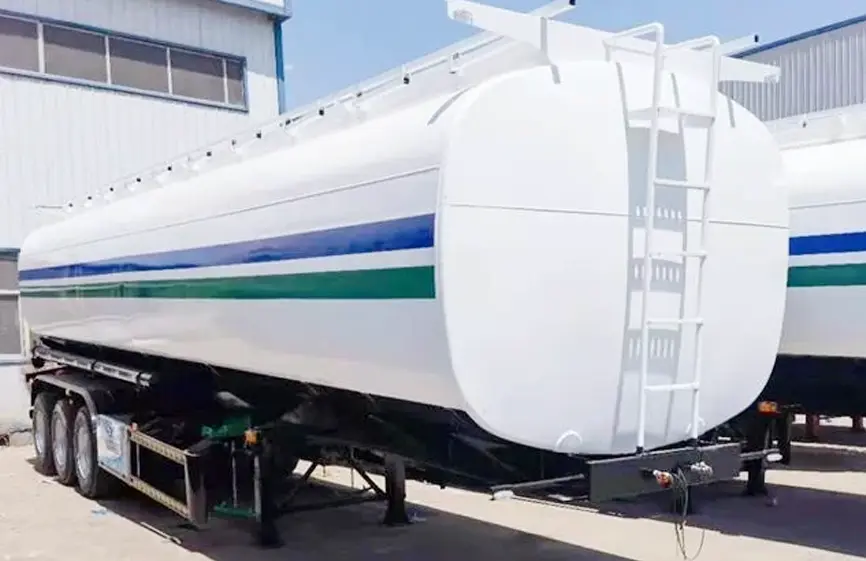
Fuel tanker trailers: 30,000–45,000 liters, sometimes higher
If you see a number outside these ranges, it usually reflects a special design, export market requirement, or theoretical maximum—not everyday operation.
Many articles list capacity numbers but skip the most important reason behind them: dimensions.
Tank length, diameter, and overall vehicle size decide how much fuel you can carry before regulations step in.
That’s why two fuel tank trucks with different dimensions will never share the same practical capacity—even if they look similar.
If you want to understand how length, diameter, axle layout, and overall size affect capacity, this guide explains it clearly:
https://sinotrukoverseas.com/news/tanker-truck-dimensions/
Reading capacity without dimensions is like measuring a room without knowing its ceiling height.
Diesel, gasoline, and aviation fuel expand differently with temperature. Safety standards often require extra headspace, which reduces fill volume.
Multiple compartments slightly reduce total liters, but improve stability and safety—especially when braking or turning.
Even if the tank can hold more, road regulations may force you to load less to stay legal.
This is why “maximum capacity” is rarely the number operators actually use.
A simple way to think about it:
A fuel tank truck is optimized for flexibility and regional delivery.
A fuel tanker trailer is optimized for volume and long-distance transport.
In practice:
Trucks usually stay below 20,000 liters
Trailers commonly operate in the 30,000–45,000 liter range
Choosing between them is more about route conditions than fuel volume alone.
There’s a common assumption that larger tanks always reduce cost per liter. That only works on paper.
Very large tankers may:
Face route and bridge restrictions
Spend more time loading and unloading
Run underfilled on return trips
Many experienced operators choose a slightly smaller capacity because it moves faster, works on more roads, and generates steadier returns.
Ask yourself three practical questions:
How far do you drive between loading and delivery?
Do you serve multiple customers or one destination?
Are you operating mainly in cities, highways, or industrial zones?
When you answer these honestly, the “right” capacity usually becomes obvious.
Bigger tanks always mean higher profits
All tankers of the same length carry the same volume
Rated capacity equals usable capacity
These ideas lead to poor buying decisions more often than people realize.
How many liters can a fuel tank truck carry?
Most fuel tank trucks carry between 5,000 and 30,000 liters depending on design and regulations.
How much fuel does a tanker trailer usually hold?
Fuel tanker trailers typically range from 30,000 to 45,000 liters.
Why can’t a tanker be filled to 100%?
Fuel expansion and safety rules require headspace inside the tank.
Does tanker size matter more than capacity?
Yes. Dimensions often decide what capacity is legally usable.
© 2025 SINOTRUK. Privacy Policy | Warranty Policy
Address: No. 777 Huaao Road, Innovation Zone, Jinan, Shandong Province, China






 English
  French
  Spanish
  Portuguese
  Arabic