Contact Form
Search




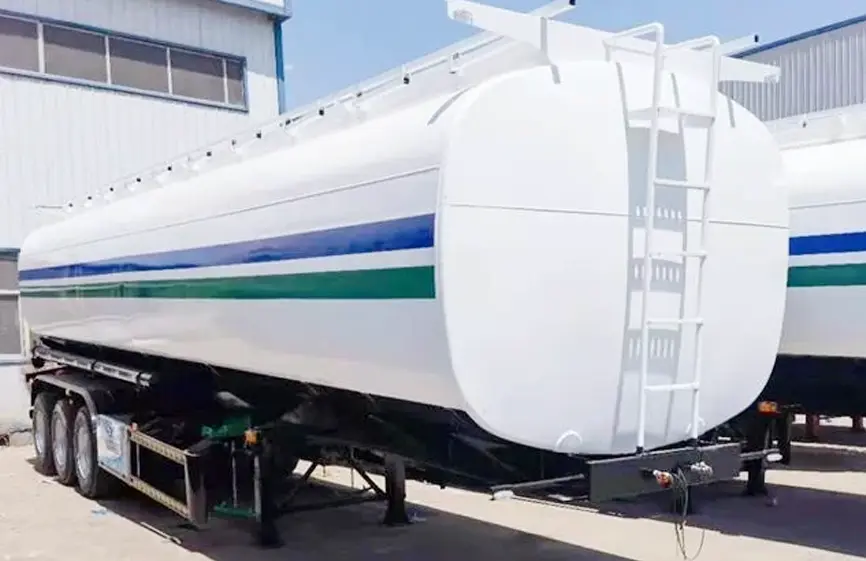
Most tanker trailers you see on the road are between 40 and 45 feet long. Some are shorter, some are longer, but the exact length is not chosen randomly. It depends on what you carry, how much you carry, and where you drive.
If you focus only on length, you will miss the real decision point. Tanker trailers are designed around volume, regulations, and stability first, and length comes as a result.
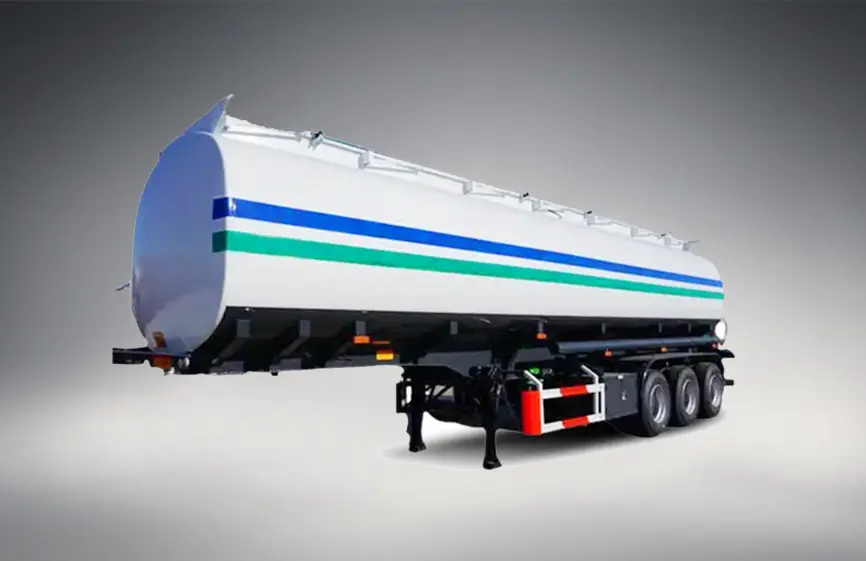
You search this question expecting a simple number. Instead, you find ranges, exceptions, and footnotes.
That confusion is normal. A tanker trailer is not like a flatbed, where length mostly equals cargo space. A tanker is more like a water bottle. You can make it longer, wider, or split it into compartments, but the goal is the same: carry liquid safely.
Once you understand that, the numbers make sense.
In real-world operation, tanker trailer length usually falls into a few clear ranges:
Around 40 feet: often used for fuel, chemicals, or regional delivery
Around 42–45 feet: very common for highway fuel transport and general liquids
Longer than 45 feet: typically designed for specific regulations or special volume needs
If you see a tanker much longer than this, it is usually because local laws allow it or the design prioritizes capacity over maneuverability.
Many articles imply that a longer tanker simply carries more. That is only partly true.
What actually limits tanker size is:
legal axle load
overall vehicle length regulations
center of gravity
braking and rollover safety
You can increase volume by changing the tank diameter or shape, not just by adding length. That is why two tanker trailers with the same length can carry very different amounts of liquid.
Think of a tanker like a thermos bottle. A taller bottle is not always better if it tips over easily.
Longer tanker trailers:
can increase capacity
but reduce maneuverability
may increase turning radius and risk in tight spaces
Shorter tanker trailers:
are easier to handle
often safer on uneven roads
may suit urban or mixed routes better
This is why many operators choose a “middle length” instead of the longest option available.
One reason online answers vary is geography.
Different countries and regions set limits on:
total combination length
axle spacing
maximum gross vehicle weight
Manufacturers design tanker trailers to sit just inside these limits. That is why you often see similar lengths repeated across markets.
If a length is popular, it is usually because it works legally in many places, not because it looks good on paper.
Instead of asking “How long is a tanker trailer?”, ask yourself:
Will you drive mostly highways or mixed roads?
Do you load and unload in tight yards?
Is stability more important than maximum volume?
What length fits your local regulations without special permits?
Your answers matter more than the absolute number.
Many buyers later realize this:
A tanker that is slightly shorter, but easier to control and legally compliant everywhere you operate, often earns more money over time than a longer one that limits where you can go.
Length should support your operation, not control it.
Is a longer tanker trailer always better?
No. Longer trailers can reduce maneuverability and increase safety risks if not matched to your routes.
Are fuel tanker trailers longer than other tankers?
They are often in the same range, but compartment design and regulations matter more than length.
Can two tanker trailers have the same length but different capacity?
Yes. Diameter, shape, and internal compartments make a big difference.
Does length affect rollover risk?
Indirectly, yes. Stability depends on center of gravity, suspension, and load behavior, not just length.
Once you understand why tanker trailers are built the way they are, the length question becomes simple.
You stop chasing the biggest number and start choosing what actually works for your operation.
That is when you no longer need to keep searching for answers.
© 2025 SINOTRUK. Privacy Policy | Warranty Policy
Address: No. 777 Huaao Road, Innovation Zone, Jinan, Shandong Province, China







 English
  French
  Spanish
  Portuguese
  Arabic