Contact Form
Search




Most people want a single clear answer. The practical conclusion is this: a typical dump truck carries about 10–14 cubic yards, and larger heavy-duty or off-road dump trucks can handle 20–30 cubic yards or more.
But the real usable capacity depends on what you haul, how you load it, and the weight limits in your area.
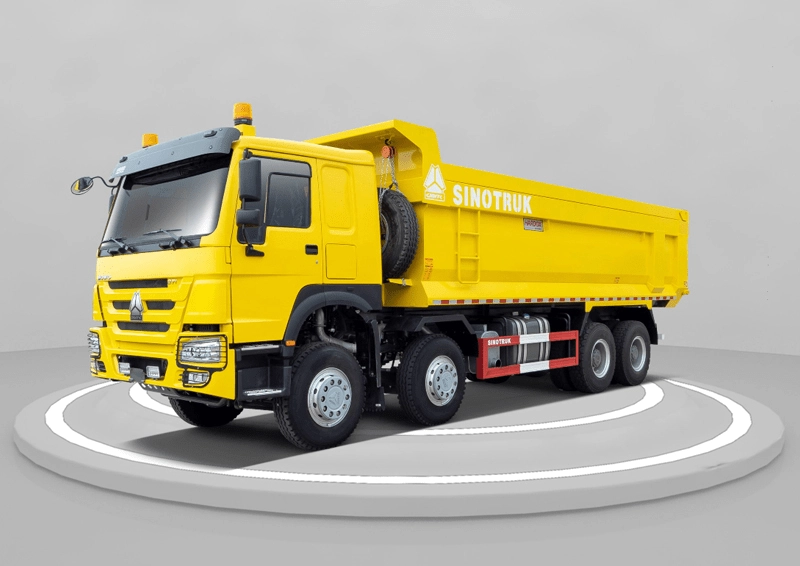
Many explanations online list only numbers. This guide helps you understand capacity in a way that matches your real job needs, so you don’t have to jump between multiple articles.
A dump truck’s “cubic yard rating” is similar to a suitcase label. It tells you the size, but not what you can pack safely.
Two trucks with the same yard capacity may carry different amounts depending on the material.
For example:
Mulch is bulky but light
Wet soil is heavy
Gravel piles differently from sand
This is why a single number often misleads operators or buyers. Your actual job conditions matter more than the label.
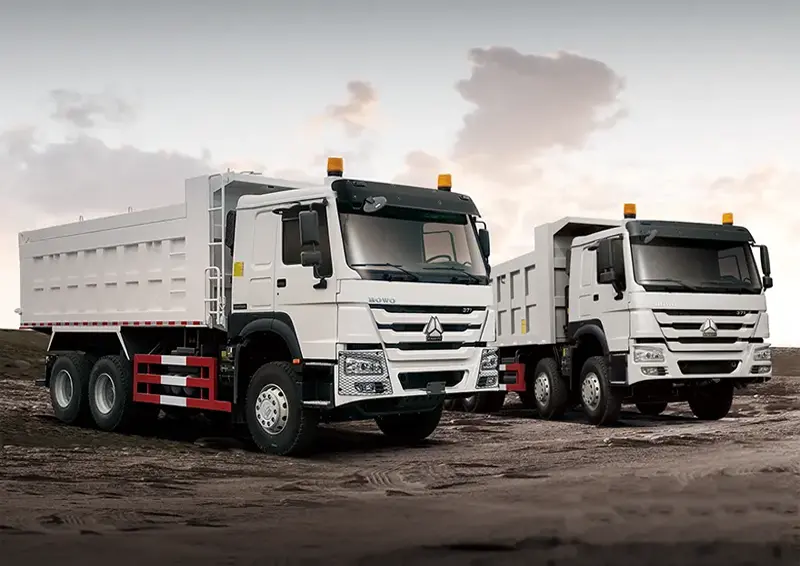
Usually 10–14 cubic yards.
Common on roads, construction sites, municipal projects, and general earthwork.
Often 5–7 cubic yards.
Preferred for landscaping work or tight job sites where maneuverability is more important than volume.
Around 15–20 cubic yards.
Useful when you need fewer trips for light materials.
Anywhere from 20 to 60+ cubic yards.
These are not street-legal and behave more like mobile earthmoving machines than trucks.
A good analogy: choosing dump truck capacity is like choosing a backpack. A bigger backpack only helps if what you put inside isn’t too heavy to carry.
This is the part many guides leave out, even though it’s usually what matters most on actual job sites.
Sand, gravel, and wet dirt hit weight limits faster.
Mulch, leaves, and compost allow taller loads without exceeding legal weight.
A truck with high sides can hold more loose, light material even if both trucks are rated the same.
Different materials naturally form different pile shapes.
Gravel forms a steeper pile than soil, changing your usable volume.
Wet dirt or wet sand can exceed weight limits even if the truck is not full.
Loose loading versus compact loading affects how much fits inside.
So the true capacity depends on the combination of material + job site + safety limits.
The most common choice for general construction and dirt moving.
Often used when carrying mulch, compost, or light aggregates.
Used on large civil projects and long-distance hauling of light materials.
Designed for quarries, mines, and mega earthmoving operations.
Choosing the right size depends on what you haul most of the time—not just the maximum number available.
If you want to remember one simple rule:
Choose dump truck capacity based on the material, not the label.
The right size gives you:
Better safety
Fewer trips
Lower fuel use
Longer equipment life
Better project efficiency
When your truck’s capacity matches your job, your whole operation becomes smoother.
© 2025 SINOTRUK. Privacy Policy | Warranty Policy
Address: No. 777 Huaao Road, Innovation Zone, Jinan, Shandong Province, China






 English
  French
  Spanish
  Portuguese
  Arabic