Contact Form
Search




Semi trailer dimensions are not just about length, width, and height. What really matters is how those dimensions interact with roads, regulations, loading habits, and your daily operation.
If you only memorize standard sizes, you may end up with a trailer that is legal on paper but inefficient or frustrating in real use.
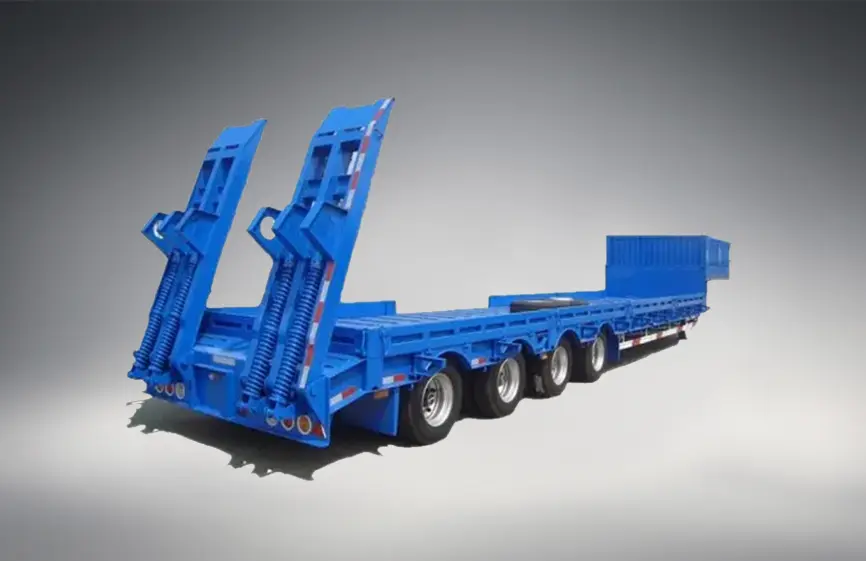
Most articles list numbers first: 40 ft, 45 ft, 53 ft, 2.5 m wide, 4 m high.
That sounds precise, but it skips the real question you care about:
Will this trailer work smoothly for your routes, cargo, and drivers?
Dimensions are not fixed facts. They are compromises between capacity, maneuverability, and compliance.
Two people may both wear size 42 shoes, but one walks comfortably and the other gets blisters.
Semi trailers are the same.
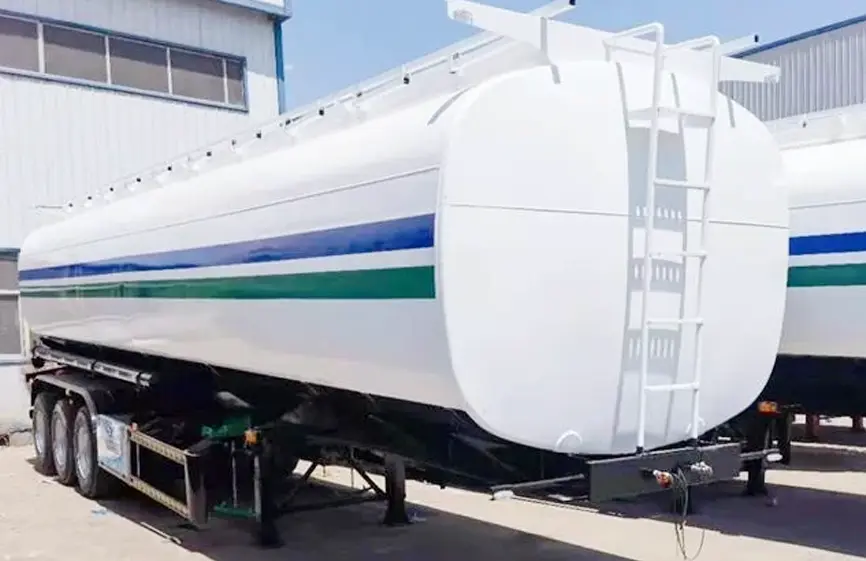
On paper, two trailers may share the same length and width. In practice, axle layout, rear overhang, and kingpin position change how they behave on the road.
That is why dimensions should be understood as a system, not a single number.
Longer trailers carry more, but they also:
reduce turning flexibility
increase off-tracking in tight corners
face stricter regional regulations
For example, 53 ft trailers are common in some markets, but in others they limit route options. A slightly shorter trailer may deliver higher real efficiency if it avoids detours and permits.
Length affects where you can go, not just how much you can load.
Standard semi trailer width is usually around 2.5 meters, but small differences matter.
Extra width can improve pallet layout, yet it may:
restrict border crossings
complicate port or warehouse access
trigger special permits
If your operation crosses regions or countries, width consistency often matters more than maximum capacity.
Trailer height is often discussed as a legal maximum, but the practical limit is lower.
Bridges, tunnels, and loading docks care about real clearance, not regulation text. A high cube trailer looks attractive, but it can quietly reduce your usable routes.
In daily operations, a slightly lower trailer that fits everywhere often outperforms a taller one that fits “almost everywhere.”
Two trailers with identical outer dimensions can behave very differently because of axle configuration.
More axles:
improve weight distribution
reduce road stress
increase stability
Fewer axles:
reduce weight
simplify maintenance
improve maneuverability
Dimensions tell you size. Axles tell you how that size moves.
If custom dimensions create flexibility, why do standards dominate?
Because standard dimensions:
simplify compliance
improve resale value
reduce driver learning curve
Custom trailers solve specific problems. Standard trailers solve most problems well enough.
Instead of asking “What is the standard semi trailer size?”, ask:
Where will you drive most often?
How tight are loading and unloading areas?
Will your cargo change over time?
Do you value flexibility or maximum volume more?
When you answer these honestly, the right dimensions usually become obvious.
Are semi trailer dimensions the same worldwide?
No. Regulations vary by country and region, especially for length and height.
Does a longer trailer always increase profit?
Not necessarily. If it restricts routes or increases empty miles, profit can drop.
Can dimensions affect fuel consumption?
Yes. Larger frontal area and higher weight often increase fuel use.
Is it safer to stay within standard dimensions?
In most cases, yes, especially for mixed or international operations.
Semi trailer dimensions are not about chasing the biggest numbers.
They are about choosing a size that works quietly and consistently, day after day, without forcing you to fight the road, the rules, or your own operation.
Once you understand that, you stop comparing charts and start making confident decisions.
© 2025 SINOTRUK. Privacy Policy | Warranty Policy
Address: No. 777 Huaao Road, Innovation Zone, Jinan, Shandong Province, China







 English
  French
  Spanish
  Portuguese
  Arabic