Contact Form
Search




If you want the clearest possible answer before reading anything else, here it is:
a dump truck is a vehicle designed to transport loose bulk materials and unload them quickly by tipping its cargo body, saving time, labor, and cost on almost every job site.
This page is written as a pillar guide. That means you do not need to open ten other articles after reading it. Everything essential—definitions, use cases, types, selection logic, safety, and real-world considerations—is explained in one place, in simple language.
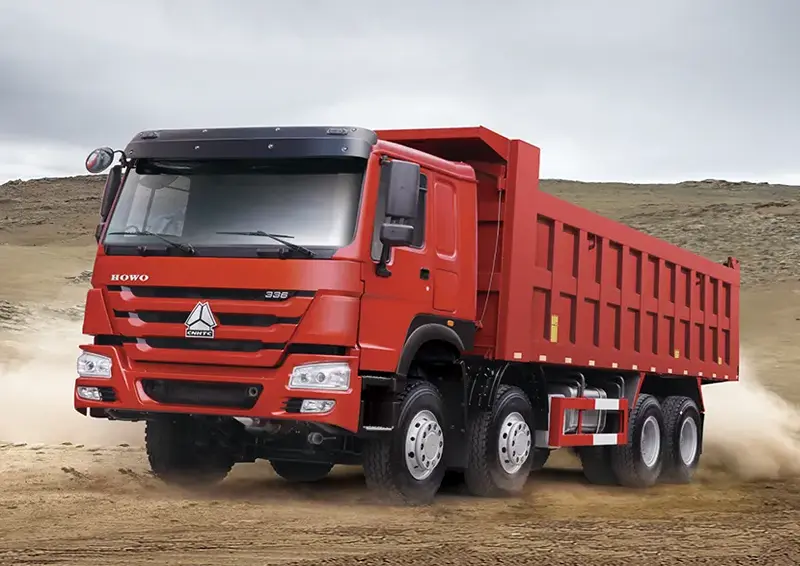
Dump trucks were not invented because people wanted bigger trucks. They were invented because unloading bulk material by hand is slow, expensive, and inconsistent.
Imagine moving sand with buckets. Now imagine lifting the bucket once and letting gravity do all the work. That is exactly what a dump truck does, just on a much larger scale.
If your job involves soil, gravel, stone, asphalt, or waste, speed of unloading matters more than elegance. Dump trucks are built for that reality.
Many trucks move cargo. Only dump trucks are designed to discharge cargo by tipping the body.
That single feature changes everything:
Faster unloading
Less labor
Fewer machines on site
Lower operating cost
If your cargo needs careful placement, a dump truck may not be ideal. But if your goal is to move volume quickly, it is often the most efficient option.
You do not need engineering drawings to understand a dump truck. Focus on these three parts.
The chassis carries the load and determines stability. A stronger chassis means better performance on rough ground and under heavy loads.
The body holds the material. Its shape, thickness, and volume affect how easily material slides out.
This system lifts the body. A reliable hydraulic system means faster cycles and safer unloading.
If these three parts are properly matched, the truck works smoothly. If not, problems appear quickly.
Instead of listing technical names, this section groups dump trucks by real working scenarios.
Used on paved roads for construction, infrastructure, and municipal projects. These are common in cities and highways.
Used in mines, quarries, and large earthmoving projects. Size is less limited, and capacity is much larger.
Designed for uneven terrain. They bend in the middle, making them ideal for soft ground and tight turns.
Includes side dump, bottom dump, and other designs made for specific unloading needs.
The right type depends on where you drive and how you unload, not just how much you carry.
Dump trucks work best with loose, non-packaged materials such as:
Sand and gravel
Soil and clay
Rocks and aggregates
Asphalt
Construction waste
If your material flows naturally, gravity becomes your best worker.
Many buyers focus on volume alone. That is a mistake.
What matters more is:
Gross vehicle weight limits
Axle load regulations
Ground conditions at the unloading site
A larger body does not always mean more usable payload. Legal limits often decide how much you can actually carry.
Use this simple logic:
Identify your material type
Understand your unloading environment
Check road and weight regulations
Match truck size to daily workload, not maximum capacity
A truck that matches your daily work will outperform a larger truck used incorrectly.
Choosing size over stability
Ignoring unloading ground conditions
Overloading to save trips
Selecting a truck based only on price
These mistakes cost more over time than buying the right truck from the start.
Dump trucks are safe when used correctly. Most accidents happen during unloading.
Key points to remember:
Always unload on level ground
Avoid uneven loading
Maintain the hydraulic system
Safety is not about the truck alone. It is about how you use it.
Roads, buildings, drainage systems, and public infrastructure all rely on dump trucks.
If dump trucks stopped operating, construction would slow almost immediately. That is how critical they are to modern life.
Transporting and unloading loose bulk materials quickly.
No. They are also used in mining, agriculture, landscaping, and municipal work.
They can, but it increases risk. Level ground is always recommended.
No. Some tip backward, some sideways, and some unload from the bottom.
No. The best truck is the one that matches your job conditions.
A dump truck is not just a vehicle. It is a productivity tool.
When chosen correctly, it saves time, labor, and cost on every load. When chosen incorrectly, it becomes a daily limitation.
If you understand the job first and the truck second, you will always make the right decision.
© 2025 SINOTRUK. Privacy Policy | Warranty Policy
Address: No. 777 Huaao Road, Innovation Zone, Jinan, Shandong Province, China






 English
  French
  Spanish
  Portuguese
  Arabic