Contact Form
Search




Dump trucks are not all the same. The right type for you depends on the terrain, cargo, load size, and how you plan to use it. Picking the wrong type may cost you efficiency, maintenance headaches, and even safety issues.
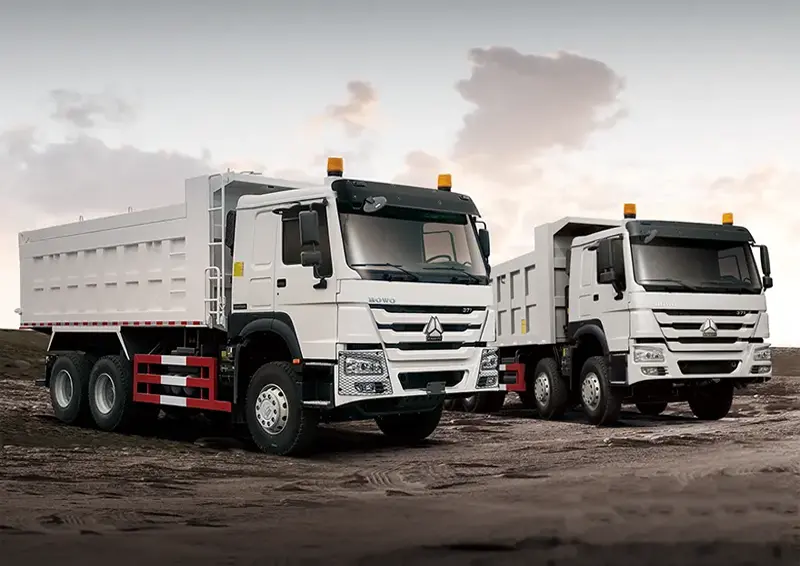
Many people think a dump truck is just a box on wheels. But in reality, different types solve very different problems. Choosing based only on appearance or capacity is like buying shoes by color instead of size—you might like the look, but it won’t fit your needs.
Best for: Construction sites with open space.
How it works: The bed lifts from the front to dump material out the rear.
Why you might pick it: Simple design, easy maintenance, versatile.
Consideration: Limited unloading control in tight spaces.
Internal link opportunity: Learn more about the basics of dump trucks in our What is a Dump Truck article.
Best for: Rough or uneven terrain.
How it works: The truck has a hinge between cab and bed for better maneuverability.
Why you might pick it: Excellent off-road capability, can handle heavier loads on soft ground.
Consideration: More complex maintenance, slower on paved roads.
Best for: Projects requiring fast unloading along the side.
How it works: The bed tilts sideways instead of backwards.
Why you might pick it: Faster and safer in narrow areas, avoids pile-up behind truck.
Consideration: More expensive, requires skill to operate safely.
Best for: Long hauls with multiple delivery points.
How it works: Carries a second trailer in tow that can be dumped separately.
Why you might pick it: Increases capacity without needing bigger trucks.
Consideration: Not suitable for tight spaces, harder to maneuver.
Best for: Heavy loads on public roads without overloading legal limits.
How it works: Features an auxiliary axle that can lift and lower to increase payload legally.
Why you might pick it: Maximize payload without penalties.
Consideration: Higher cost, more maintenance points.
Best for: Mining and large-scale earthmoving.
How it works: Extremely large trucks designed for moving massive loads in quarries or mines.
Why you might pick it: Unmatched capacity, rugged design for extreme environments.
Consideration: Cannot drive on public roads, requires specialized operators.
Instead of memorizing categories, focus on your actual use case:
Where will you drive most? Roads or rough terrain?
How much load do you regularly carry?
How tight are the unloading areas?
How important is speed versus safety and control?
Answering these will often guide you to a specific type without guessing.
Q: Can a rear dump truck work like a side dump?
A: Not effectively. Side dumps are designed for fast, controlled sideways unloading.
Q: Are articulated dump trucks slower on highways?
A: Yes, their design prioritizes off-road stability over high-speed performance.
Q: Which type gives the highest payload on public roads?
A: Super dump trucks maximize payload legally with liftable axles.
Q: Do all dump trucks require the same license to operate?
A: No. Heavier and specialized types may need commercial licenses or special endorsements.
© 2025 SINOTRUK. Privacy Policy | Warranty Policy
Address: No. 777 Huaao Road, Innovation Zone, Jinan, Shandong Province, China






 English
  French
  Spanish
  Portuguese
  Arabic