Contact Form
Search




If you first think about what you carry, how high it is, and where you drive, the right type becomes obvious.
If you start only from definitions, you may overpay, need extra permits, or struggle on the road.
That is why this guide focuses on your real work — not just technical terms.
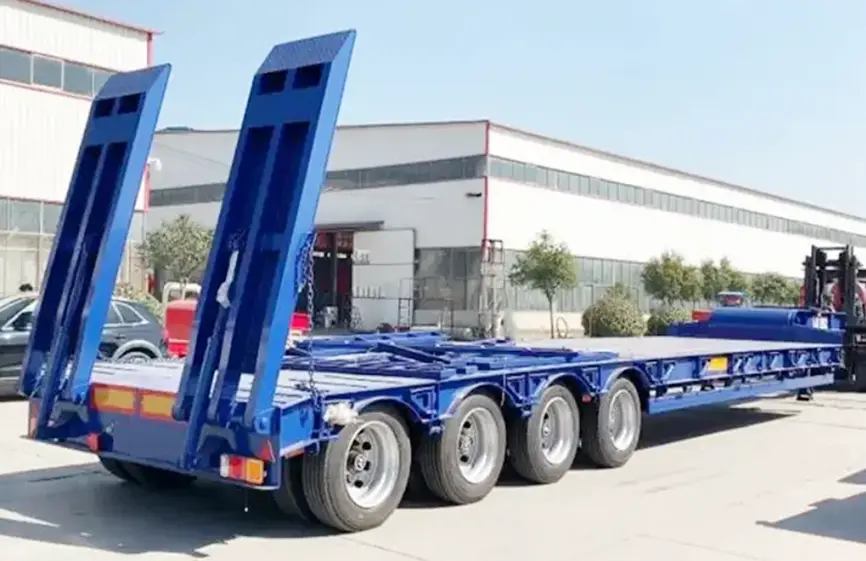
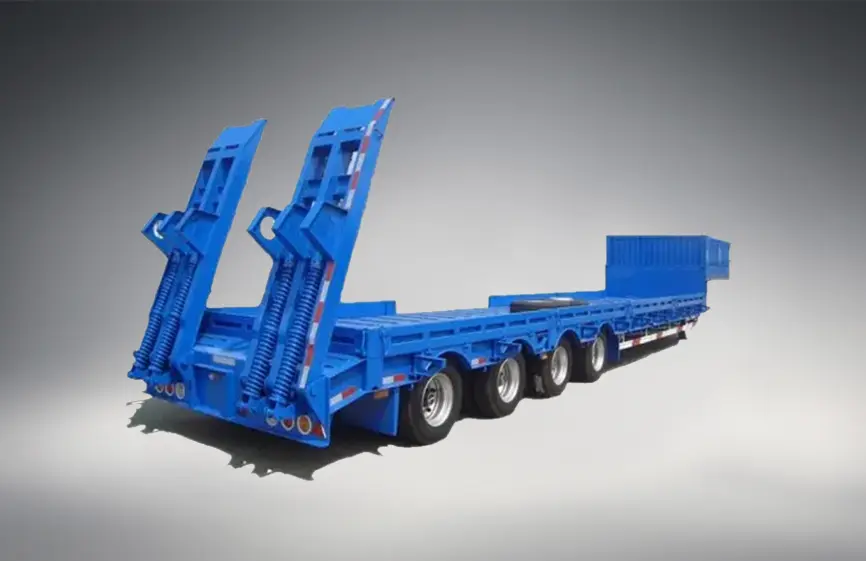
Lowbed trailers sit lower than flatbeds.
That lower deck gives you more height clearance, so you avoid:
unnecessary oversize permits
route restrictions
delays at checkpoints
safety risks when loading and unloading
Think of it like carrying a tall cabinet at home:
If you walk through the door upright, you hit the frame.
Tilt it lower — suddenly everything becomes easy.
Lowbeds do the same thing for heavy machinery.
But sometimes, a flatbed is still the smarter choice. If you want to see when each one really works better, read this practical comparison: Flatbed Trailer vs Lowbed Trailer – Which One Fits Your Job.
Instead of listing dozens of tiny categories, let’s organize them in the way operators actually think.
You connect and disconnect like a normal semi-trailer.
The front frame is fixed — simple and strong.
Best when:
you load with a crane or ramp
your cargo is heavy but not extremely long
you want fewer moving parts and lower maintenance
Watch out:
Loading from the front is difficult because the neck does not detach.
This is the type many people picture when they think “lowboy”.
The neck detaches, the front of the deck drops to the ground, and you drive machinery directly onto the trailer.
Great for:
excavators
bulldozers
loaders
road construction machines
Benefits for you:
safer loading
faster operation
no need for high ramps
Trade-off:
More complex, higher initial cost, more maintenance.
Not as low as a true lowbed, but lower than a flatbed.
You get:
good height clearance
simple structure
easier permitting in many regions
Think of it as the “middle ground” option.
Perfect when:
your cargo is tall, but not extreme
you want flexibility across many jobs
you run mixed fleets
These trailers “stretch” to carry long loads that cannot fit standard decks.
Common for:
wind power components
long steel beams
bridge sections
oversized industrial parts
They protect your cargo and reduce bending stress.
However:
More length means turning becomes harder and requires experienced drivers.
Here the goal is simple:
Carry extreme weight safely.
More axles = better weight distribution across the road.
Used for:
mining machinery
power plant equipment
oversized transformers
very large construction equipment
This is where engineering matters most:
suspension, frame design, braking, and stability.
You may read things like:
“Lowbed trailers solve height problems completely.”
Not true.
Even the lowest lowbed still has limits.
Bridges, tunnels, and road rules still apply — and sometimes your cargo shape, not just height, becomes the real problem.
Another common mistake:
“More axles are always better.”
Extra axles may require more permits, higher tolls, and stricter turning rules.
If your cargo is not extremely heavy, you may be paying for capacity you never use.
If you want to see how dimensions change what is legal on the road, this guide explains it clearly: Flatbed Trailer Dimensions – Practical, Real-World Guide.
Before asking for price, ask yourself three questions:
Occasional “big” job should not define your whole fleet.
Measure real working height — not brochure height.
Highway only, or narrow urban and rural roads?
When customers talk to us at Sinotruk Overseas, we usually discover that:
Most transport problems do not come from the truck —
they come from choosing a trailer that does not match the job.
| Trailer Type | Main Advantage | Typical Use |
|---|---|---|
| Fixed Gooseneck | Strong, simple | Machinery with ramp or crane loading |
| Detachable Gooseneck | Easiest loading | Large construction equipment |
| Drop Deck | Good balance | Tall cargo without extreme permits |
| Extendable Lowbed | Long cargo | Wind, beams, structural parts |
| Multi-Axle Heavy Duty | Extreme weight | Mining, industrial projects |
Are lowbed and lowboy the same?
In many markets, yes. “Lowboy” is simply another common name.
Is an RGN always better?
No. It is better only if you really need front-loading and very low decks.
Can I use one lowbed for everything?
You can try — but specialization usually saves fuel, time, and maintenance.
Do lowbeds always remove the need for permits?
Not always. Height, width, and weight rules still apply.
© 2025 SINOTRUK. Privacy Policy | Warranty Policy
Address: No. 777 Huaao Road, Innovation Zone, Jinan, Shandong Province, China






 English
  French
  Spanish
  Portuguese
  Arabic